Cleaning single dental implants
Although a dental hygienist can clean the implant's abutment and the crown, the patient must also perform daily maintenance. Signs of improper home care include:
- Bleeding
- Red and swollen gums
- Pain when chewing
- Bad breath
- Bad taste in the mouth
Taking a small amount of extra care when cleaning a single dental implant can shield surrounding teeth from bacteria and increase its longevity.
Brushing
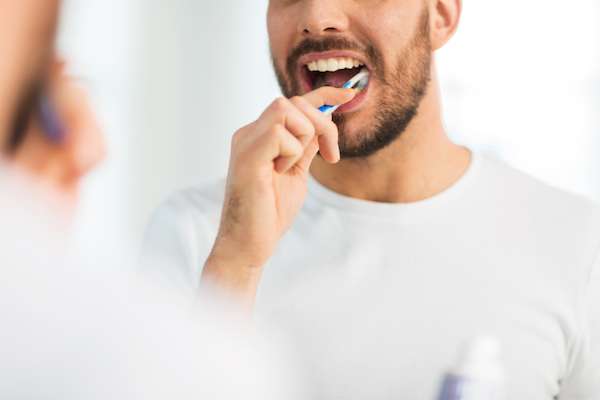
Brushing twice per day is necessary for patients with and without implants. Patients with dental implants must gently brush the crown, using a soft nylon brush to avoid scratching its surface. Oral bacteria can migrate into the jaw through scratches on the crown.
Using mild toothpaste
Unlike natural teeth, implant crowns have an acrylic surface that abrasive substances such as baking soda can wear away. Worn surfaces create access points for bacteria that can infect the jaw and the tissue around the implant. Brushing with a mild toothpaste eliminates this concern.
Water flossing
Water flossers have parts that can direct water flow deep inside the space between the crown and the gums where bacteria accumulate. A pulsating hydraulic force of room temperature water washes away plaque and debris and is gentle enough to apply every day.
Alternative flossing
Soft interdental brushes can achieve the same level of cleaning that water flossing provides. Standard string floss is inadvisable for use near dental implants because it can shred and enter the gum tissue causing infection. Specially designed floss consisting of shred-resistant stiff ends and a pliable middle can safely clean the area where the crown's edge meets the gumline.
Gum stimulating
Patients can gently massage the gums with stimulators to send nutrient-rich blood to the implant region. A gum stimulator is also an excellent cleaning device consisting of a long metal or plastic arm supporting a small triangular-shaped rubber or silicone tip that reaches beyond the gumline near the implant crown to scrape away plaque. It can enter the tight space between the crown and other teeth to loosen trapped debris.
Cleaning implants that support bridges and dentures
Whether a patient has a single implant or multiple implants, the cleaning methods are the same, with some variation. Additional tools in a home care arsenal can benefit patients with implant-supported bridges and dentures.
Interdental brushing
Patients can use small, narrow brushes with soft bristles to clean implant-supported bridges or dentures near the gumline where standard toothbrushes cannot easily reach. Subtle changes in design depend on which part of the mouth is cleaned.
Mouth rinsing
A mouth rinse can penetrate spaces that other home care tools can not reach. Antibacterial rinses can dislodge debris while killing germs that can cause periodontitis.
Conclusion
Dental implants can last a lifetime with proper cleaning. Rigorous home care is essential but does not take the place of in-office deep cleaning.
Request an appointment or call Gorfinkel Dentistry at 954-231-5007 for an appointment in our Plantation office.
Related Posts
Permanent tooth loss can be devastating, affecting your appearance as well as your oral and overall health. Fortunately, dental implants give people the opportunity to fully restore their smile with a prosthetic replacement. There are many benefits to choosing dental implants to replace lost teeth, including: Lower risks for bone loss Natural-looking results Protection from…
Dental implants can restore missing teeth with a stable, natural-looking solution and are often the recommended choice when early warning signs appear in the mouth. Many people assume tooth replacement can wait, especially when only one tooth is missing or when discomfort seems mild. However, delays can allow shifting, bone loss, and bite changes that…
Dental implants can replace missing teeth, restore chewing strength, and provide support for a natural-looking smile. For optimal results, an endodontist or root canal specialist can carefully plan and place implants. After all, successful treatment outcomes begin with clear education about what to expect at every step, as well as proper care and maintenance afterward.…